
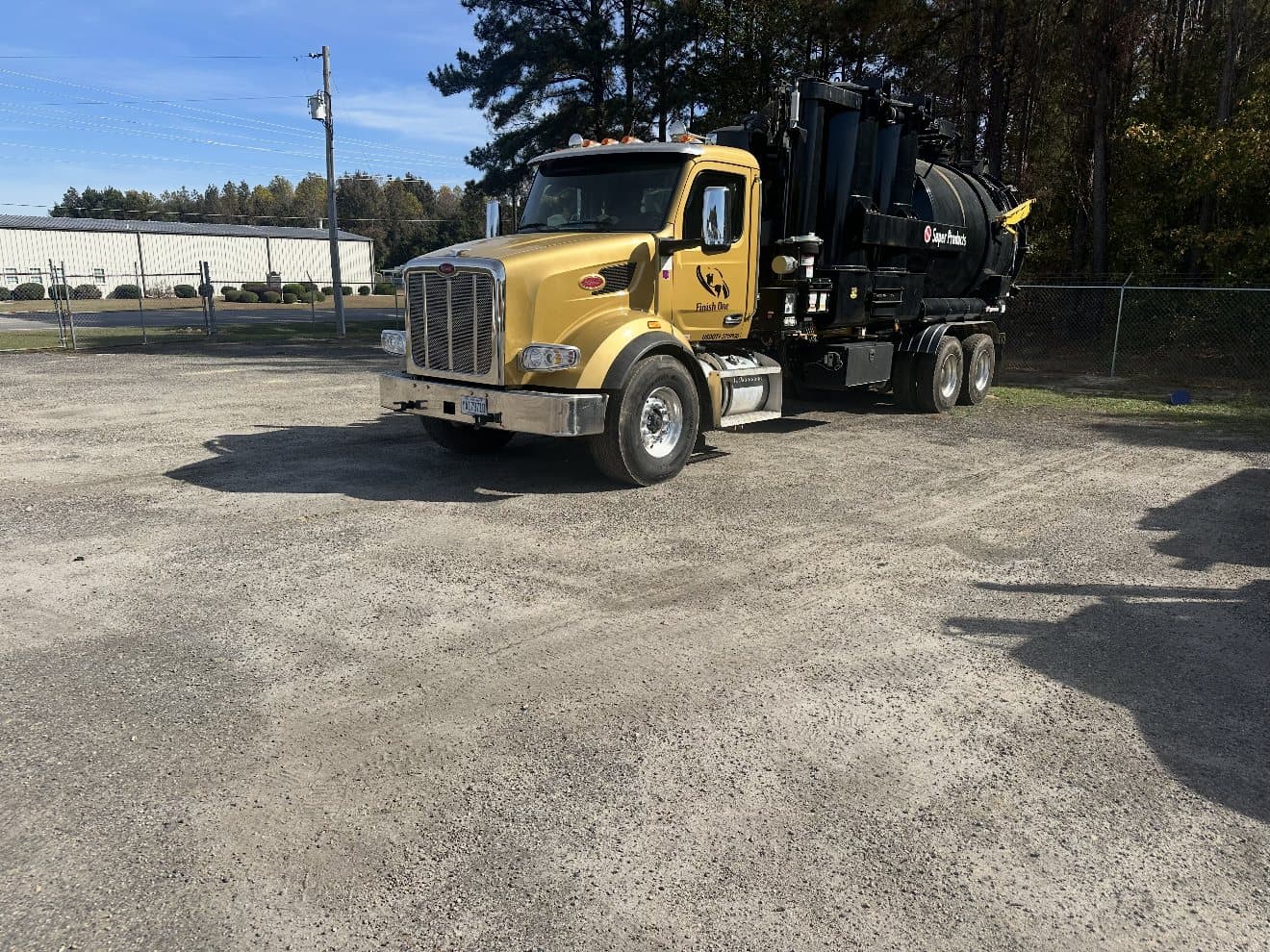
How it works
Hydro excavation breaks up soil with pressurized water and pulls the slurry into the truck's debris tank. The result is a clean hole with the utility exposed and undamaged, which is why utilities and engineers specify it for potholing and daylighting.
It's faster than hand digging, safer than mechanical excavation near marked lines, and leaves a smaller footprint on finished surfaces. Spoils are hauled off in the truck, so the site stays clean.
What's included
- Utility potholing and daylighting
- Slot trenching for conduit and line installs
- Pole and sign post hole digging
- Remote digging via hose where truck access is limited
- Spoil removal and backfill coordination
Surfaces and what comes off
- Surfaces
- Clay, sand, loam, and frozen or compacted soil
- Removes
- Soil around buried utilities without the strike risk of a backhoe or the labor of hand digging
Hydro Excavation questions
Why hydro excavation instead of a backhoe?
A backhoe can strike a buried line. Water and vacuum can't. Most utilities require hydro excavation or hand digging within the tolerance zone of a marked line.
Do I still need to call 811?
Yes. Locates must be in place before we dig. We'll confirm the ticket is active before scheduling.
What happens to the dirt?
The slurry goes into the truck's debris tank and is hauled off, or dumped on site in a spot you choose if you want it for backfill.